

Why Your Leggings Keep Failing the Squat Test (And What to Look For Instead)
It happens to almost every woman who has ever set foot in a gym. Here's why it keeps happening — and exactly what separates leggings that hold up from ones that let you down.
You're mid-squat. You catch a glimpse in the mirror. And suddenly your entire workout is derailed by a single, sinking realization — your leggings have gone completely see-through.
It's one of those moments that is equal parts mortifying and infuriating. Mortifying because there are mirrors everywhere, and people all around you, and you have no idea how long it's been happening. Infuriating because you paid real money for these leggings, and they are failing you in the most public, most unflattering way possible. The worst part? You can't un-see it. You spend the rest of the session adjusting, second-guessing, and mentally planning your exit route.
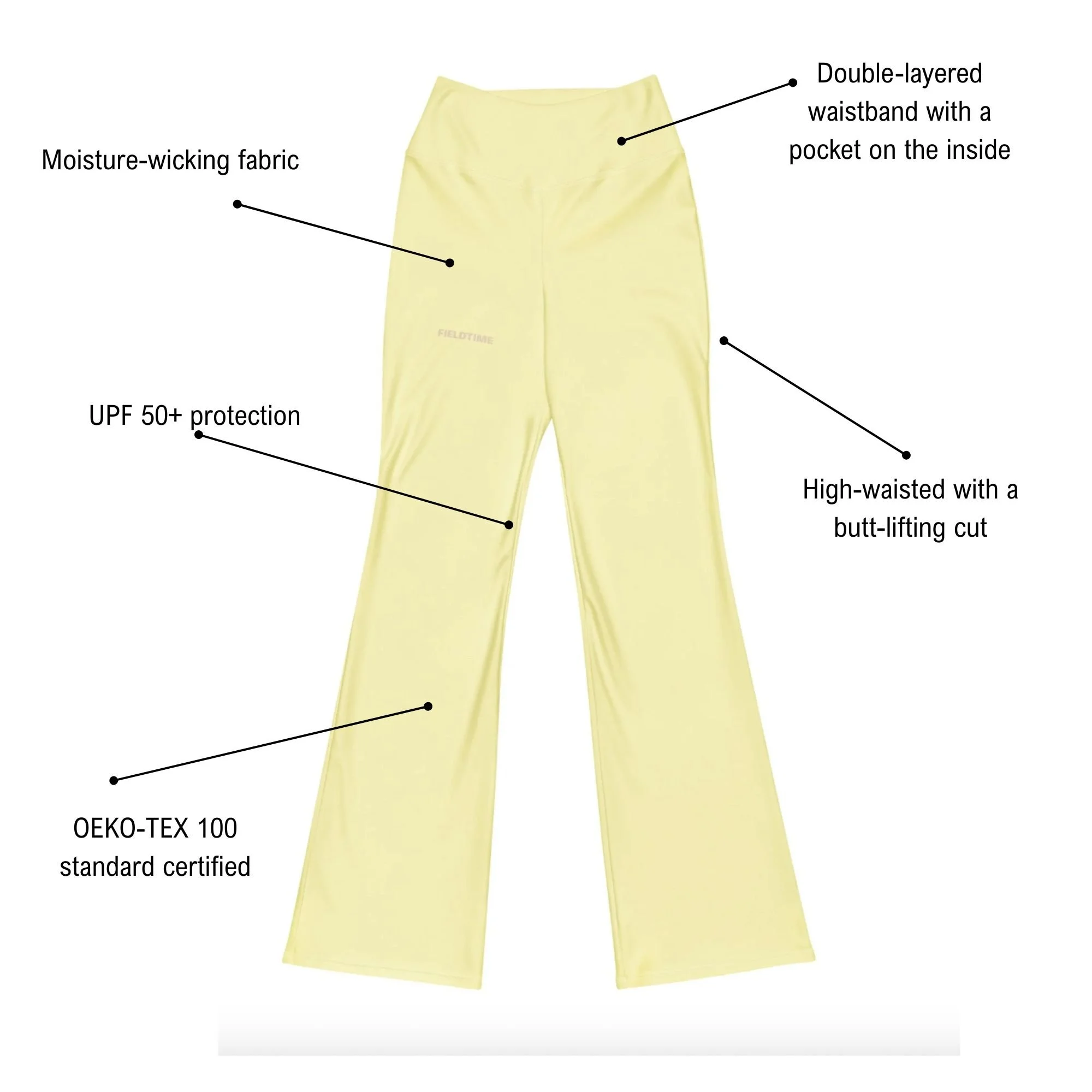
FIELDTIME Cream Yellow flare leggings specs
This is not a niche problem. The issue is much more widespread than most women admit — and it is rarely the wearer's fault. The real culprits are fabric engineering, textile density, garment assembly, and the mechanics of sizing. Berlei In other words, the leggings failed you. Not the other way around.
What Fieldtime Built Instead
Before getting into why most leggings fail, it helps to understand what a legging actually needs in order to pass — because Fieldtime engineered theirs around exactly that problem.
The Fieldtime Flare Leggings are built from soft, stretchy premium fabric with a mild compression feel, moisture-wicking technology, and UPF 50+ protection. The double-layered waistband with an interior pocket isn't a style detail — it's structural reinforcement that keeps everything locked in place through deep squats, lunges, and transitions. The high-waisted, butt-lifting cut distributes stretch evenly across the seat and thighs — the exact area where most leggings lose opacity. The fabric is OEKO-TEX 100 standard certified, a third-party quality standard that speaks directly to material density and safety.
The Fieldtime Yoga Leggings take a different engineering approach for a different kind of demand. They're built with four-way stretch fabric that recovers on both the cross and lengthwise grain, meaning the fabric moves with the body in every direction without thinning under tension. A triangle-shaped gusset crotch panel reinforces the highest-stress zone in any deep movement. Flat seam coverstitch construction eliminates the weak stitch points where cheaper leggings typically begin to fail.
The Fieldtime Capri Leggings round out the lineup with the same four-way stretch microfiber construction, adding quick-dry performance for high-output sessions. All three styles carry UPF 50+ — a detail that matters more than most people realize. Blocking UV radiation requires a specific fabric density. That same density is exactly what keeps leggings opaque under tension.
That's the blueprint. Now here's why most leggings don't follow it.
Why Leggings Go See-Through in the First Place
The primary reason leggings lose opacity during squats lies in fabric stretch. When material is pulled taut — especially over the glutes and thighs — its fibers separate, allowing light to pass through. OneHanesPlace The deeper the squat, the more the fabric is forced to stretch. If the construction isn't engineered to handle that tension, transparency is the result.
Most transparency issues happen when the fabric stretches beyond its design limits. This usually occurs during deep squats, lunges, or hip mobility work. SKIMS The common culprits are predictable once you know what to look for: thin or low-density fabric, poor elastane quality, leggings that are too tight for the wearer's body, incorrect fabric blends, and light colors without proper lining.
Fit plays a bigger role than most women realize. Too tight means fibers overstretch beyond design limits. Too loose means fabric shifts, twists, and exposes skin. Proper compression should feel secure and supportive — not restrictive or sloppy. Berlei Getting the size right isn't just about comfort. It directly determines whether the leggings stay opaque under load.
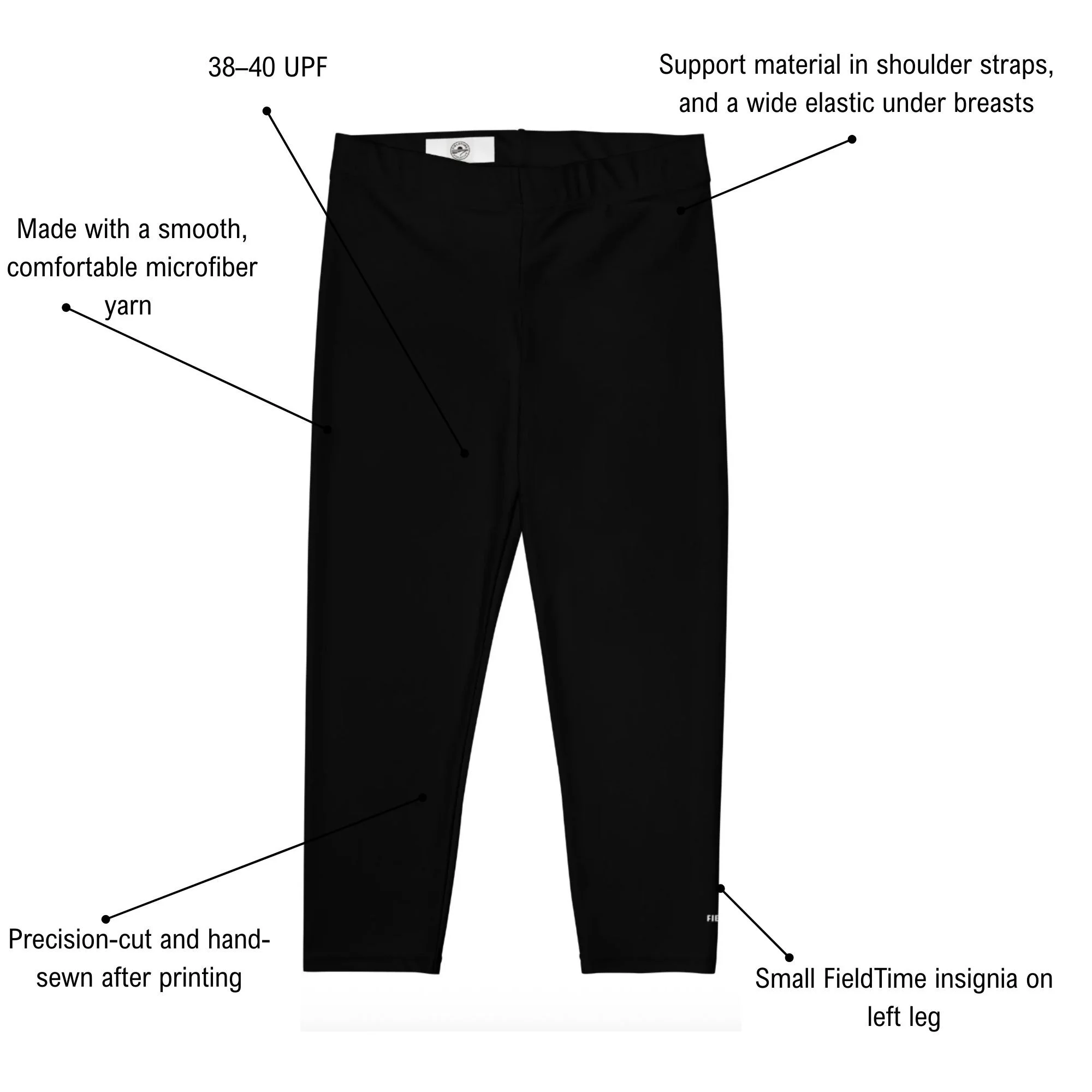
FIELDTIME Black capri leggings specs
Even premium leggings aren't immune when construction shortcuts are taken. When a product fails the basic squat test and becomes see-through, it breaks the fundamental contract between brand and customer. LaneBryant A major activewear brand recently pulled an entire legging line from online sales after customers reported transparency failures mid-movement — proof that price alone is no guarantee of quality.
The Fabric and Construction Truth
The key factor that distinguishes squat-proof leggings from regular leggings is fabric construction. High-quality, thick, and durable materials designed to withstand stretching and bending are blended with spandex, polyester, and nylon — known for their stretchability and elasticity — which provide compression and ensure leggings maintain their shape and opacity even when stretched to their limits. Leonisa
Four-way stretch is the spec that separates functional leggings from decorative ones. The combination of fabrics with four-way stretch ensures that leggings can stretch both horizontally and vertically without becoming thin or transparent. This allows for full range of motion during squats and other exercises without compromising opacity. Leonisa Single-direction stretch fabrics handle movement in one plane and collapse under multi-directional tension — which is precisely what squats, lunges, and yoga flows demand simultaneously.
Many transparent leggings rely on single-knit or single-jersey construction, which stretches primarily in one direction and lacks structural reinforcement. Higher-quality construction distributes tension across multiple yarn pathways, preventing fiber separation during movement and maintaining consistent coverage. Berlei
Seam construction matters just as much as fabric. Higher-quality leggings are constructed with reinforced stitching and strong seams, which prevent the fabric from becoming thin or worn over time. The Pencil Test A coverstitch — the type used in both the Fieldtime Yoga and Capri Leggings — is specifically designed to handle stretch without snapping at the seam under repeated tension.
The Waistband Problem Nobody Talks About
The squat test failure conversation almost always focuses on the seat and thighs. But the waistband is where a lot of leggings quietly fall apart — and when the waistband fails, everything below it follows.
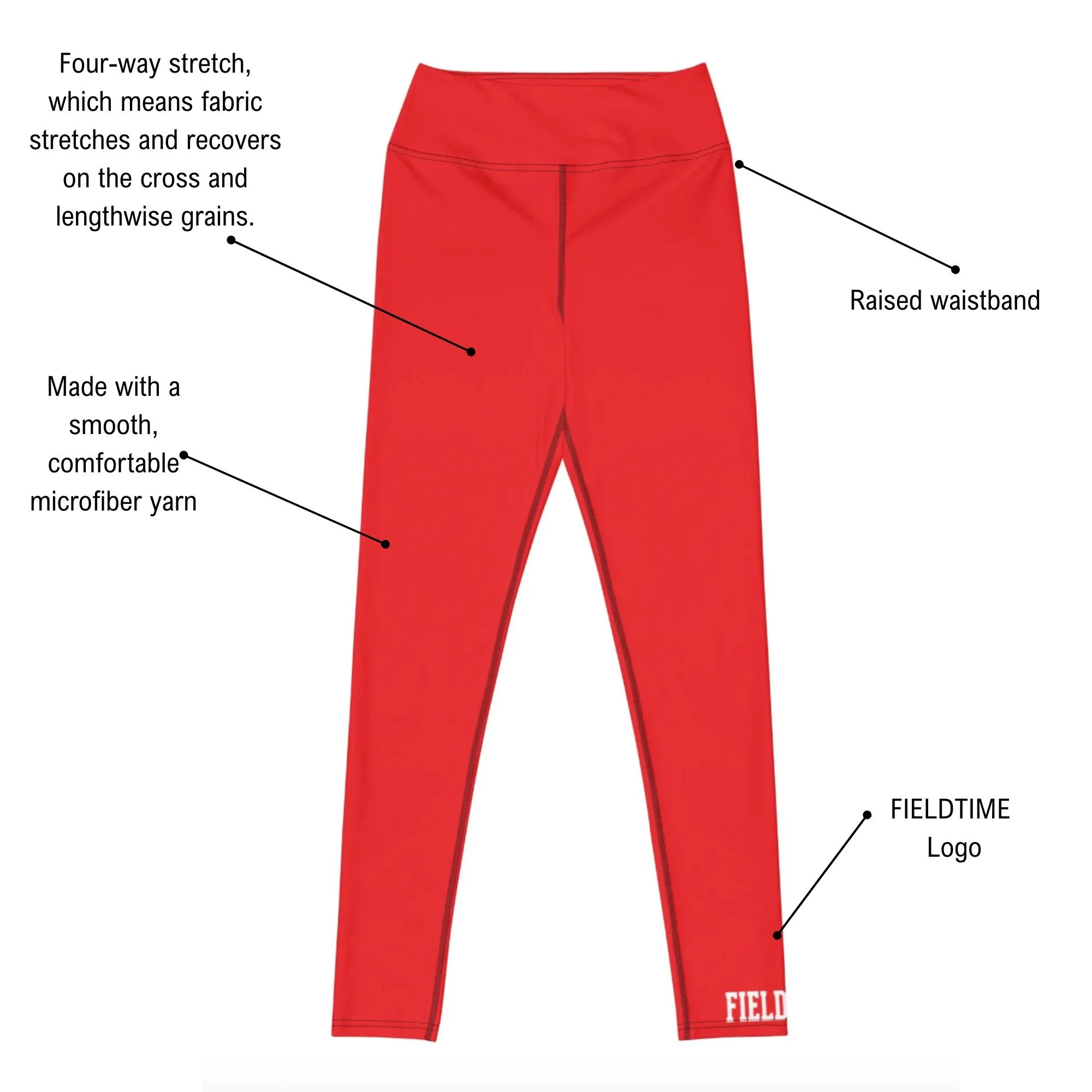
FIELDTIME Alizarin/White yoga leggings specs
Most people rely on a static standing fit test when trying on workout leggings, which fails to simulate real movement. Even pants that feel secure in-store can shift or loosen during twisting, hinging, or deep squats. Thirdlove A waistband that passes the dressing room test and folds down in the third set of squats isn't a good waistband. It's a liability.
The rolling waistband is one of the most universally complained-about legging failures. Thin elastic bands without structural reinforcement collapse under pressure and fold inward. Fabric curl caused by an imbalance between waistband tension and body movement contributes directly to rolling. Thirdlove Once a waistband rolls, it pulls the entire fabric panel with it — creating drag, shifting coverage, and turning a performance garment into a distraction.
The internal structure matters more than thickness. The best waistband for workout leggings has a multi-layered structure to support deeper movements and a secure fit. High-stretch-recovery fibers prevent bagging, sagging, and long-term compression loss. Thirdlove The double-layered waistband on the Fieldtime Flare Leggings is built on exactly this principle — structural reinforcement that doesn't rely on thickness alone, but on how the layers work together under load.
How to Test Any Legging Before You Commit
You don't need a gym mirror to find out if your leggings will hold up. The tests are simple and take less than two minutes.
Stand in front of a full-length mirror and perform a deep squat or lunge. If the fabric remains opaque and no lines or colors show through, the leggings are likely squat-proof. The Pencil Test For a more thorough check, pull the waistband outward while looking at the fabric closely and stretch it by at least an inch or two. If the fabric begins to look thin, see-through, or changes color when pulled, the leggings are not squat-proof. The Pencil Test
The light test is the most revealing of all. Hold the leggings up to a bright light source and stretch the fabric. If light passes through easily, they are likely not squat-proof. Tommy John Do this before every new pair, not after the first workout when the return window has already closed.
Some brands specifically advertise their leggings as squat-proof and put them through rigorous testing — having testers perform squats in various lighting conditions to check for transparency. HSIA That kind of accountability is what to look for when a brand makes the claim. Anyone can write "squat-proof" in a product description. Not everyone can back it up.
The Bottom Line
Workout leggings should empower, not undermine, your fitness routine. Knowing how to choose leggings that stay opaque during squats transforms the experience — from worrying about appearance to focusing on performance. OneHanesPlace
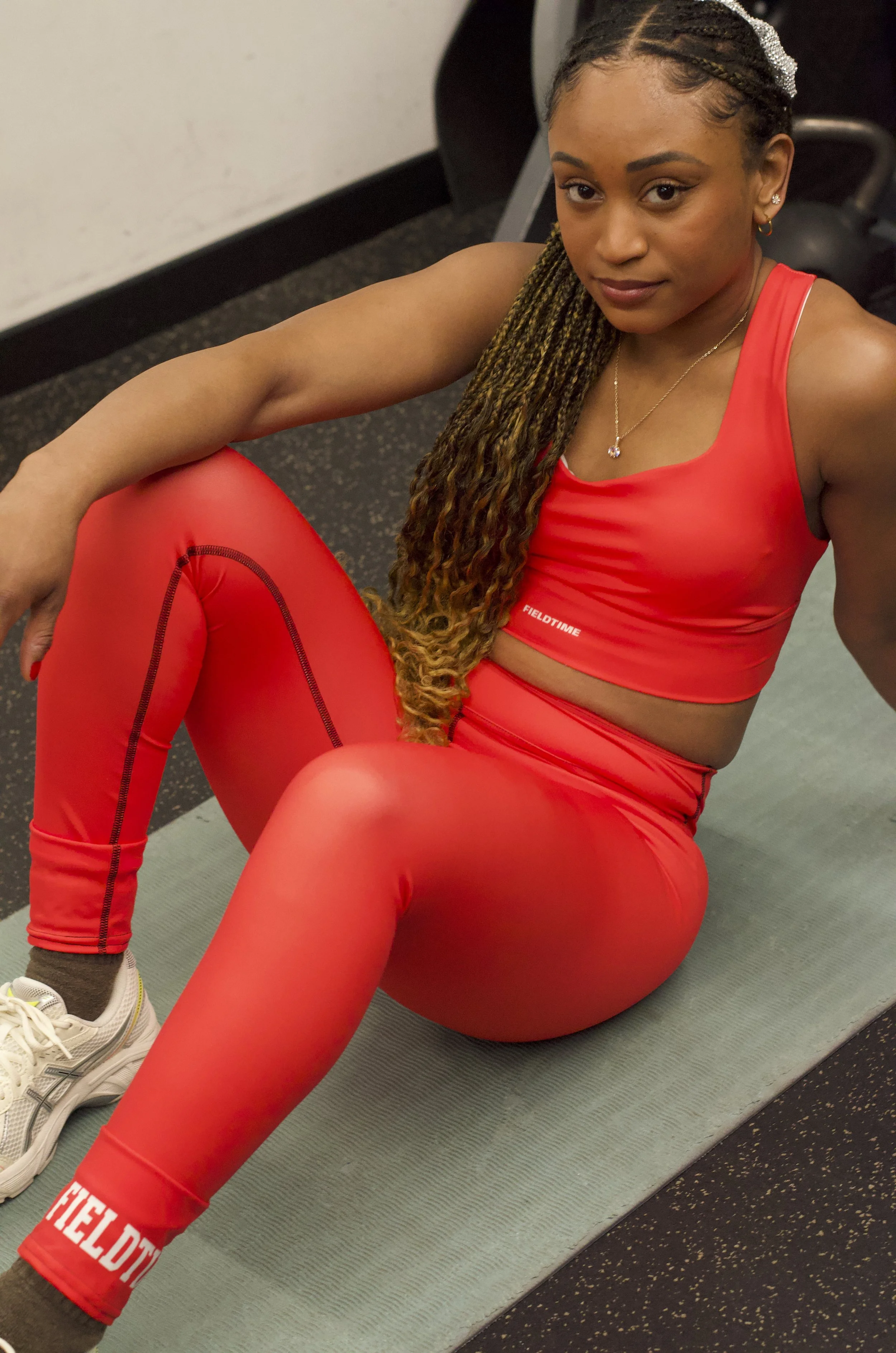
Muay Thai Boxing Champion Kay Gentle wearing FIELDTIME Alizarin/White sports bra (Size Small) and Alizarin/White yoga leggings (Size Small)
The squat test should already be solved before leggings ever leave the factory. Four-way stretch fabric, reinforced gusset construction, double-layered waistband, coverstitch seams, and OEKO-TEX certified material density — that's not a wishlist. That's what Fieldtime built into every pair.
Stop settling for leggings that make you think about your leggings. Train in something that lets you forget they're there.
Shop Fieldtime leggings at fieldtime.store