

Is Your Activewear Actually Safe to Wear? What the Label on Your Leggings Is Really Telling You.
Most women read food labels, switched to clean beauty products, and filtered their water. But if your activewear isn't certified clean, you're still being exposed — and your workout is making it worse.
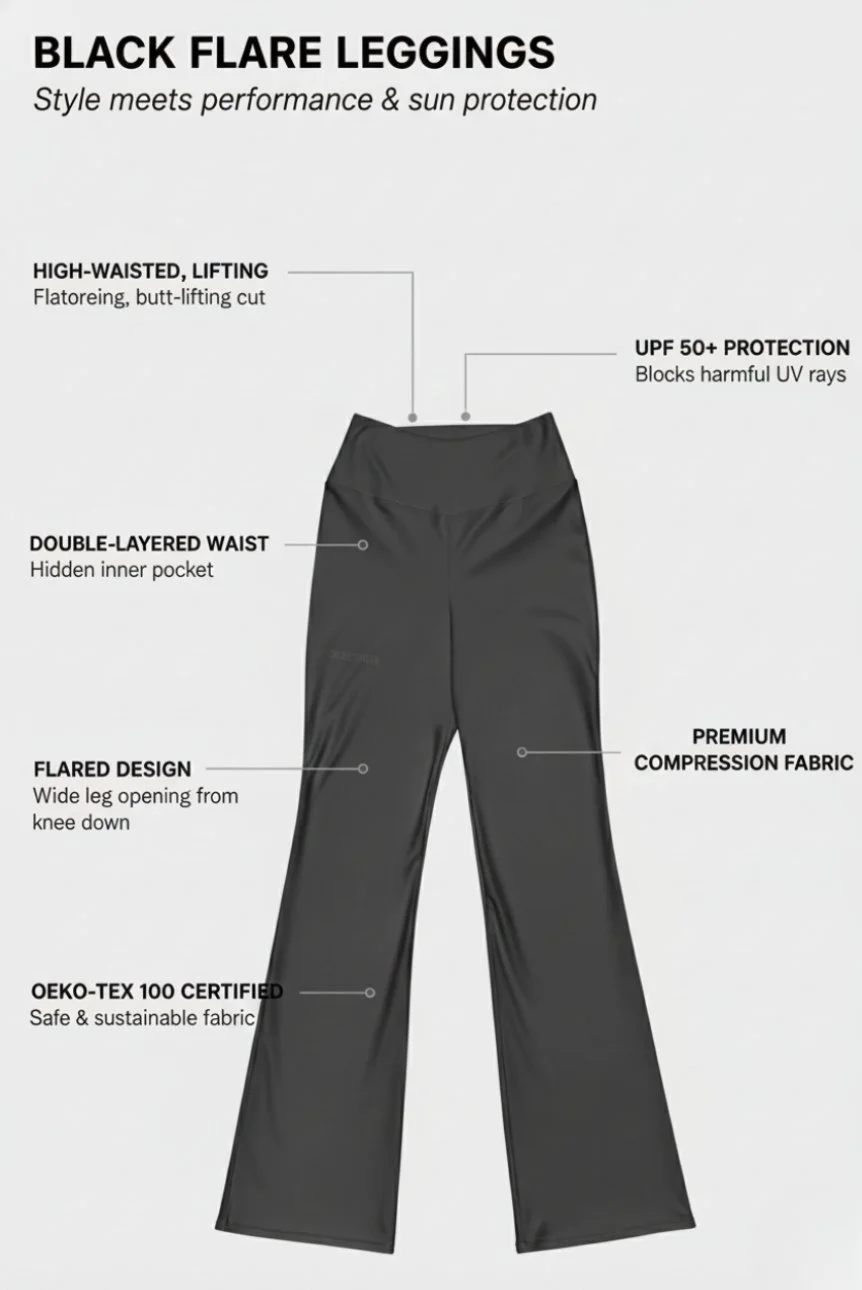
There's a good chance you've never thought twice about what's actually in your leggings. You bought them because they fit well, held up through squats, and looked good. The label said something vague like "performance fabric" or "moisture-wicking technology," and that was enough. Most women stop there.
But here's the problem: everyday garments can contain up to 8,000 synthetic chemicals — and most brands don't have to disclose a single one. Quora When those garments are your activewear — worn tight against your skin, in high-friction zones, while your body temperature rises and your pores open — the stakes are considerably higher than they are with a loose-fitting blouse you wear to a meeting.
This isn't fearmongering. It's chemistry. And once you understand what's actually happening at the skin level during a workout, the OEKO-TEX Standard 100 label on Fieldtime's activewear stops looking like a marketing detail and starts looking like exactly what it is: proof of safety
What's Actually in Your Workout Clothes
The activewear industry has spent decades optimizing for performance, stretch, and shelf appeal. Safety has largely been an afterthought — and in many countries, including the United States, it remains largely unregulated. Fashion is one of the least regulated consumer industries when it comes to chemical safety. The Pencil Test
The result is a long list of chemicals that routinely show up in the activewear most women wear daily. Here's what the research actually shows:
PFAS — known as forever chemicals — are used to make fabrics stain and sweat resistant. These chemicals accumulate in the body over time and have been linked to cancer, thyroid dysfunction, and immune system damage. They're called "forever chemicals" for a reason. Tigers Eye
Formaldehyde is used for wrinkle resistance — the same chemical once used in embalming. Azo dyes give fabrics their vivid colors but come with a side of skin reactions and potential carcinogenic risks. Bravolution Formaldehyde is classified as a class-three carcinogen and can cause respiratory issues. HuffPost
Phthalates are colorless, odorless liquids used to make plastics more durable. They do not permanently bind to the materials they are applied to and can rub off onto skin during wear. Phthalates are most commonly found in activewear made from synthetic fibers, anti-odor clothing, and printing inks used to put graphics on garments. Exposure can lead to reproductive problems and other negative health effects. Quora
Studies have shown that activewear and clothing from over 100 major brands contained up to 30 times the legal limit of BPA, based on California law thresholds. Quora BPA is an endocrine disruptor linked to hormonal imbalance, reproductive issues, and metabolic problems.
These aren't fringe concerns from niche wellness blogs. They're documented findings from consumer health organizations, university research, and independent testing labs — and they apply to activewear from brands women trust and wear every day.
Why Working Out Makes It Worse
Wearing chemically-treated clothing to a dinner party carries a different level of risk than wearing it to a HIIT class. The reason comes down to how skin behaves under physical exertion.
When you sweat, your pores expand, leaving you more vulnerable to toxins in clothing. This is especially true when working out in synthetic activewear. Texas A&M University The combination of heat, friction, and moisture creates the exact conditions that accelerate chemical absorption through the skin — the same mechanism that makes nicotine patches and hormone therapy patches work.
A 2023 University of Birmingham study found that sweat-mimicking solution leaches hazardous chemicals from microplastic fibers. Oily sweat components help draw out chemicals like flame retardants, which can then be absorbed through skin. Thirdlove
Tight-fitting clothes create the perfect conditions for transdermal absorption — particularly in high-friction zones like the groin, breasts, and armpits, areas rich in hormone receptor sites. Tigers Eye The tighter and more form-fitting the activewear, the more direct and prolonged the skin contact — and the greater the potential for chemical exposure over time.
The most dangerous clothes in your drawer are usually the newest, cheapest, and tightest. Quora That should give every woman pause before she reaches for a pair of discount leggings before a morning workout.
The Greenwashing Problem
Here's where it gets more frustrating. Many women have already started paying attention to what's in their activewear and have gravitated toward brands that market themselves as "natural," "eco-friendly," or "sustainable." The problem is that none of those words mean anything without third-party verification behind them.
"Tested for safety" — by whom, and to what standards? "Chemical-free" is an impossible claim — water is a chemical. "Non-toxic" without certification is unverifiable. "Eco-friendly dyes" doesn't mean safe dyes. "Dermatologically tested" — tested on what, and by whom? The Pencil Test
"Eco" and "organic" labels don't guarantee safety. Without third-party certifications, many brands still use toxic dyes, softeners, and finishes even on so-called sustainable fabrics. Quora Recycled polyester, often marketed as the environmentally conscious choice, can still leach chemicals and microplastics into the skin and water supply.
Most brands aren't legally obligated to list textile chemicals, dyes, or finishes. HuffPost That means the only way to actually know what's in your activewear is to look for a certification that tested the finished product — every fiber, every seam, every dye, every thread — against a documented and independently verified standard.
That certification is OEKO-TEX Standard 100.
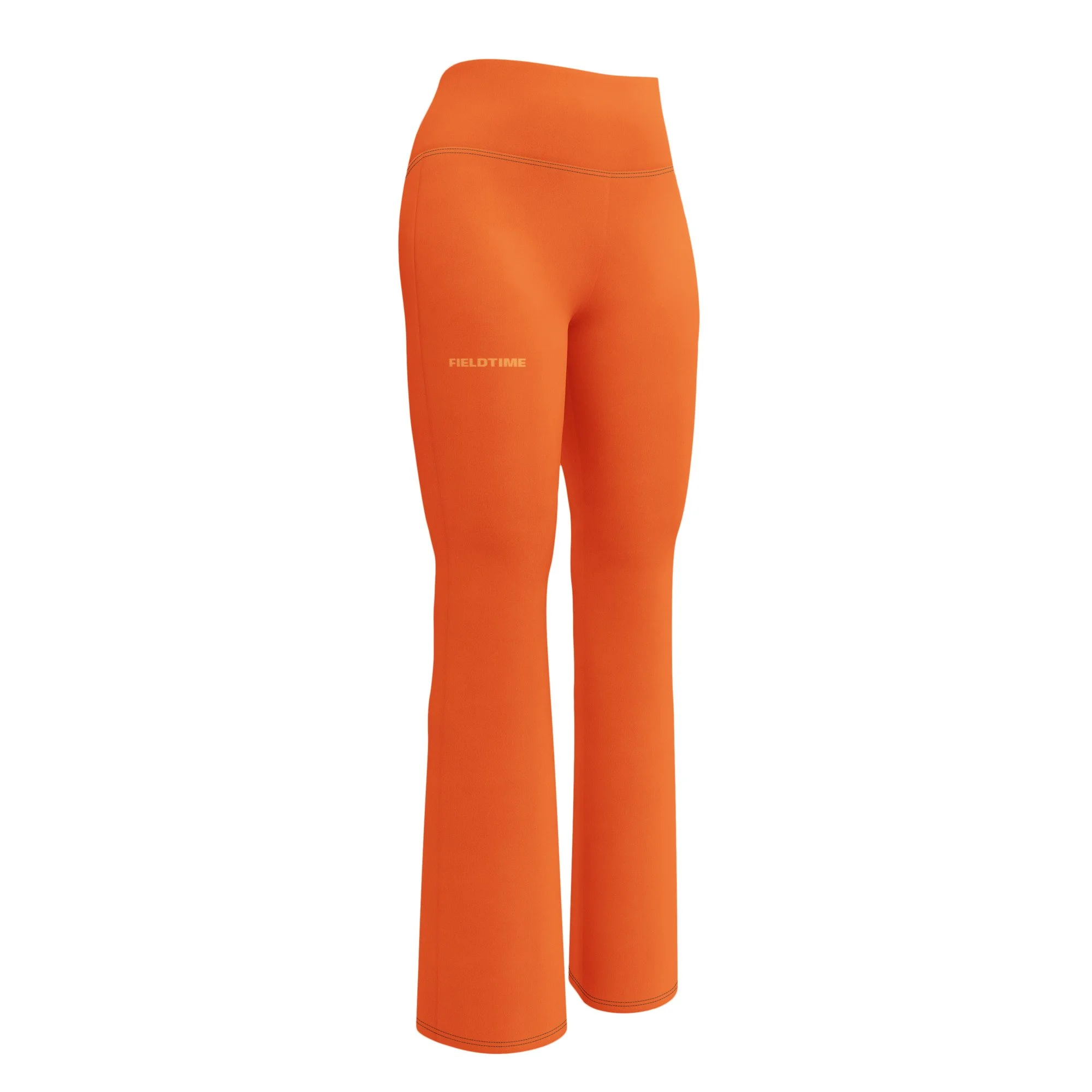
Orange/ Texas Rose Flare leggings
What OEKO-TEX Standard 100 Actually Means
OEKO-TEX isn't a fabric or a trend — it's a globally recognized certification that examines every thread, dye, and detail of a textile for harmful chemicals. Founded in Europe in 1992, it's rooted in science, not marketing. LaneBryant
The most well-known of its certifications, STANDARD 100, tests every component of a textile product — thread, stitching, buttons, dyes, coatings — for over 1,000 harmful chemicals. Soma This is not a test of the raw fabric roll before manufacturing. It is a test of the finished, ready-to-wear product — the exact item that will sit against a woman's skin during a workout.
The testing is extensive and takes into account many regulated and unregulated substances. In many cases, the limits go beyond national and international requirements. The criteria are updated every year and tests are conducted annually. Tommy John A certification from five years ago is not valid today — which means brands carrying the OEKO-TEX label have to keep earning it.
OEKO-TEX certified products are rigorously tested for over 300 harmful substances, including formaldehyde, pesticides, heavy metals, and phthalates, reducing health risks for consumers. Leonisa
And here is the detail that matters most for activewear specifically: OEKO-TEX Standard 100 is the strictest level of certification available — the same level originally used for baby clothing, ensuring that bras, underwear, and activewear are safe from endocrine disruptors, irritants, and unregulated toxins that could absorb through skin. LaneBryant If a standard was designed to protect newborn skin — the most sensitive and absorbent skin on the human body — it is more than adequate for adults wearing leggings to a spin class.
Why It Matters More for Activewear Than Any Other Clothing
Not all clothing carries the same risk profile. A blazer worn over a shirt, or a pair of jeans worn over a layer of clothing, has far less direct skin contact than a pair of form-fitting leggings worn against bare skin for an hour of intense movement.
Intimates and activewear pose the highest risk of any garment category. These pieces sit on the body's most absorbent areas, where sweat and friction increase the absorption of toxins like PFAS, formaldehyde, and phthalates. Quora
Contact dermatitis cases frequently trace back to chemicals rather than fibers. Some women are allergic to disperse dyes in polyester, causing red, itchy rashes. New synthetic clothes carry chemical residues — formaldehyde, phthalates — which can disrupt the skin barrier, especially in women with eczema-prone or sensitive skin. Thirdlove
When the fabric is form-fitting, moisture-wicking, and worn during exercise, the risk profile is as high as it gets in the apparel category. That's why the OEKO-TEX certification — designed for the most vulnerable skin — is the right standard to apply to activewear, not an optional upgrade.
What Fieldtime Did About It
Fieldtime built their Flare Leggings, Yoga Leggings, and Capri Leggings with OEKO-TEX Standard 100 certified fabric — meaning every component of every piece has been independently tested against over 1,000 chemical safety limits before it ever reaches a customer.
That certification doesn't just cover the main fabric panel. It covers every single part of the garment — the thread, the stitching, the fittings, and the knit itself — all tested for harmful substances and certified as safe for direct skin contact. Tommy John
For a legging worn tight against the skin, through a sweaty workout, in the exact conditions that maximize chemical absorption — that's not a minor detail. It's the most important spec on the label.
Trust third-party certifications over marketing language. They have specific testing protocols and accountability. Any brand can claim to be safe. Not every brand can prove it. The Pencil Test
Fieldtime can.
Shop OEKO-TEX certified Fieldtime activewear at fieldtime.store
Sources: OEKO-TEX Standard 100 official certification body (oeko-tex.com) · Vibrant Body Company (vibrantbodycompany.com) · Sustainable Rookie (sustainablerookie.com) · HYPEACH (hypeach.com) · Tripulse (tripulse.co) · Silver Sea Apparel (silverseaapparel.com) · OR Basics (orbasics.com) · DOJO Sportswear (dojo-sportswear.com)