

Why You're Sweating Through Your Workout Clothes And What Moisture-Wicking Actually Means.
Most activewear brands use the term "moisture-wicking" like a buzzword. Here's what it actually means, why it matters more than most women realize, and what happens to your skin when your gear doesn't deliver it.
You've seen it on every activewear label: moisture-wicking. It's one of the most used — and most misunderstood — terms in the fitness apparel industry. Women buy leggings and sports bras based on that single claim, assume they're covered, and then wonder why they're still drenched, chafed, and uncomfortable twenty minutes into a workout.
The problem isn't sweat. Sweat is your body doing exactly what it's supposed to do. The problem is activewear that traps that sweat against your skin instead of moving it away — and brands that slap "moisture-wicking" on a label without the technology to back it up.
Here's what moisture-wicking actually means, how to know whether your activewear genuinely delivers it, and why getting this wrong has consequences that go well beyond feeling uncomfortable mid-workout.
What Fieldtime Built For This Problem
Before getting into the science, it helps to understand what a properly engineered moisture-wicking garment actually looks like — because Fieldtime designed their leggings and sports bra specifically around this problem.
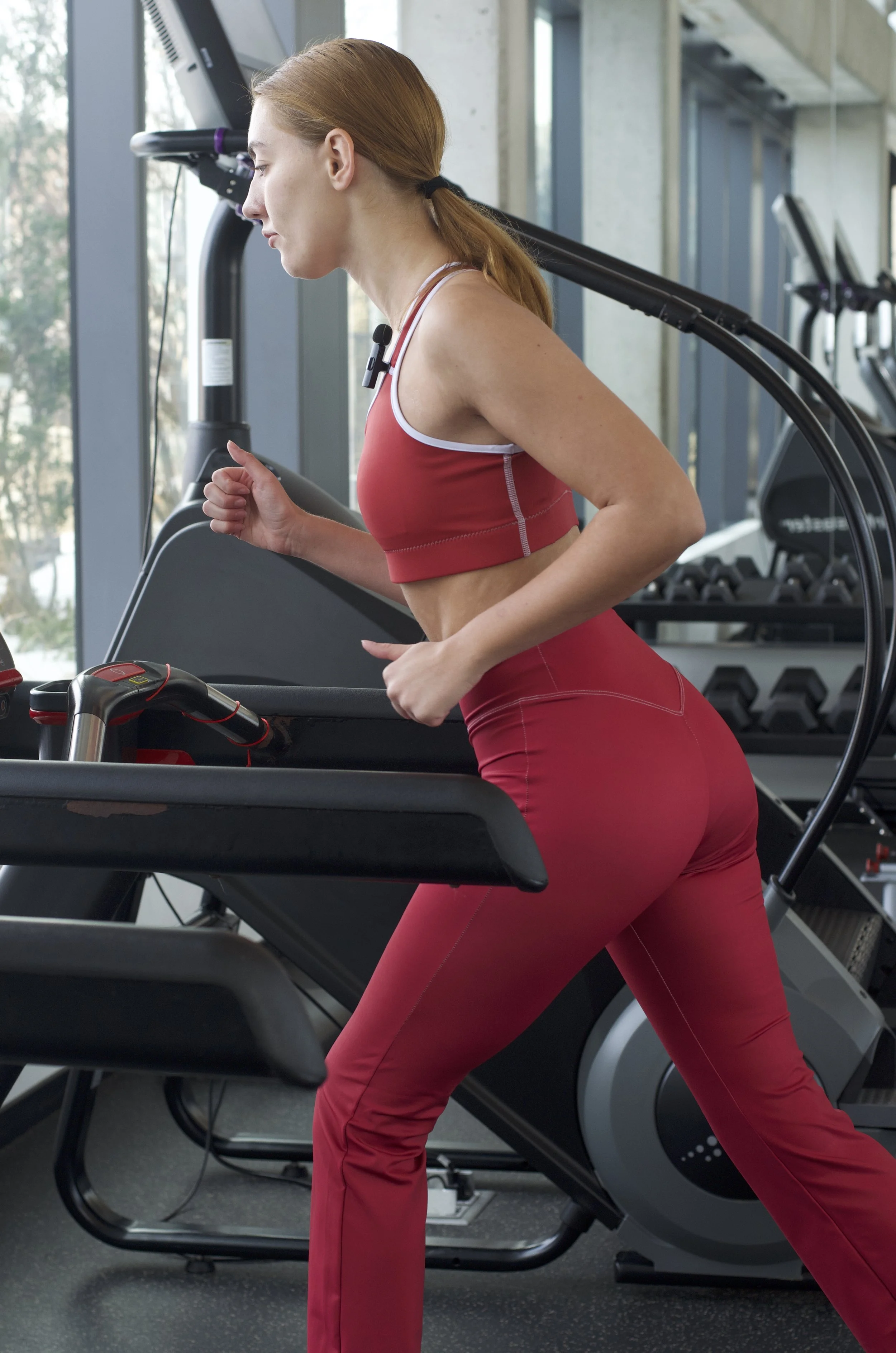
Fieldtime flare leggings size small
The Fieldtime Flare Leggings and Yoga Leggings are built with moisture-wicking fabric combined with four-way stretch microfiber yarn and UPF 50+ protection. Microfiber construction isn't an accident — microfiber technology spotlights finely crafted fibers that create a larger surface area for capillary action, featuring more pores and allowing more efficient moisture transport. Leonisa More surface area means faster sweat movement, faster evaporation, and a drier experience throughout the entire workout.
The Capri Leggings add quick-dry performance to the same moisture-wicking construction — built for high-output sessions where sweat management is the difference between a productive training block and a miserable one. All three styles are made with smooth, comfortable microfiber yarn and flat or coverstitch seam construction, which reduces friction in the exact zones where moisture-trapped fabric causes the most irritation.
That's the blueprint. Now here's why it matters.
The Science Behind Moisture-Wicking — And Why Most Brands Get It Wrong
Moisture-wicking refers to a fabric's ability to pull sweat and moisture away from your skin and transport it to the outer surface where it can evaporate quickly. Unlike traditional materials that trap moisture against your body, moisture-wicking fabrics create a barrier between you and dampness, keeping you dry and comfortable no matter how hard you push yourself. HSIA
The mechanism driving this is capillary action. Capillary action refers to the ability of a liquid to flow in narrow spaces without the assistance of external forces. In moisture-wicking fabrics, this process is facilitated by tiny channels within the fibers that draw sweat away from the body. Polyester fibers, for example, are engineered with a specific structure that enhances capillary action, ensuring efficient sweat transport and moisture management. Thirdlove
Once moisture molecules are on the outside of the fabric, surface tension pulls them together to evaporate quickly. This two-step process — absorption from the skin surface, evaporation from the outer fabric surface — prevents sweat from soaking the garment. LaneBryant
The key word there is engineered. The fibers making up sweat-wicking fabrics act like small channels that pull sweat away from your skin and disperse moisture evenly across the fabric's surface so it can evaporate quickly. The Pencil Test That channeling structure has to be built into the fiber itself during manufacturing — it can't be added after the fact, and it can't be claimed on a label without being verified in the construction.
Modern moisture-wicking fabrics are no longer just about the material — they're about how it's made. The rise of microfiber and nanofiber technology has created textiles with ultra-fine channels for rapid sweat transport. Soma A brand that is truly delivering moisture-wicking performance is investing in the fiber construction, not just the marketing copy.
Why Cotton Is the Enemy of a Good Workout
The most persistent myth in activewear is that cotton is a safe, comfortable choice for exercise. It is neither.
Cotton can absorb up to 7 percent of its own weight in sweat. All that wetness held close to your body is not only uncomfortable, but it can also make it harder to cool yourself when you're exercising in the heat. On cool, rainy days, that dampness makes you even colder. SKIMS
Cotton workout clothes act like sponges — they trap odors while drying and release them again once they get wet. Cotton absorbs more moisture, which creates an ideal environment for odor-causing bacteria to multiply. Sweat and friction break down cotton fibers quickly, making clothes look worn and less functional. Miss Mary
The temperature consequence is significant. Your body depends on evaporation to regulate temperature during exercise. Sweat evaporating from your skin creates a cooling effect. Wet cotton blocks this process and might raise your core temperature. Miss Mary A raised core temperature during exercise isn't just uncomfortable — it's a performance limiter that forces your body to work harder to do the same amount of work.
100% cotton is the worst choice for sweat-heavy workouts. It absorbs moisture and keeps it next to your skin, which increases weight and chafing. Thirdlove Every extra mile, every extra set, every extra minute of a workout becomes harder when your clothes are working against your body's cooling system instead of supporting it.
What Trapped Sweat Actually Does to Your Skin
This is the part most activewear conversations skip over — and it's arguably the most important. Moisture-wicking isn't just about comfort. It's about skin health.
Sweat combines with dead skin cells on the surface of the skin and causes the blockage of pores — one of the first steps in pimple formation. Breakouts or irritation can occur in any hair-bearing area that sweats. HuffPost When activewear traps that sweat against skin for an hour of movement, it accelerates every part of that process.
If you go about your day in sweat-drenched clothes, fungi can multiply quickly and cause a burning or itching sensation. Red, acne-like bumps on the skin are a clear indication of folliculitis — a mild infection of the hair follicle caused by prolonged exposure to moisture and bacteria. Tigers Eye
Sweat promotes leaching of dyes from fabric onto the skin, which can cause an itchy rash that may last days to weeks after a single exposure. HuffPost Azo dyes — commonly used in synthetic activewear — are among the worst offenders for allergic skin reactions, and they are often not mentioned on labels. Texas A&M University
Research shows polyester gym wear harbors more odor-producing bacteria, while cotton tends to carry more benign commensal microbiota. This microbial imbalance can lead to persistent body odor and various skin disorders. Quora The skin's microbiome — the ecosystem of bacteria that protects and regulates the skin — is directly affected by what you wear against it during a workout.
Moisture-wicking fabrics like polyester, nylon, and spandex help dry the skin and prevent irritation from sweat. Seamless or flatlock-stitched garments minimize friction, while poor-quality fabrics that trap moisture leave the skin damp for longer, increasing chafing risk significantly. Bravolution
How to Know If Your Activewear Is Actually Wicking
The label isn't enough. Here's what to actually look for:
Fabric composition matters first. Polyester and nylon blended with spandex are the go-to choices for moisture-wicking activewear — durable, lightweight, breathable, and quick-drying. They are safe choices for a wide variety of workouts and environments. SKIMS If the primary fiber is cotton or a cotton-dominant blend, the garment is not genuinely moisture-wicking regardless of what the label says.
Fit matters second. A snug, stretchy spandex blend garment will hug your body, which is ideal for wicking — it's hard for a fabric to wick sweat off your skin if it's hanging loose. OneHanesPlace Moisture-wicking requires contact between the fabric and the skin to initiate capillary action. Baggy activewear, regardless of fabric quality, underdelivers on moisture management.
Construction matters third. Fabrics with contoured panels, flatlock seams, and verified sweat-wicking properties perform best. Tommy John Seam placement in high-friction zones — inner thighs, underarms, waistband edges — determines whether moisture gets managed or trapped in exactly the spots where it causes the most irritation.
Finally, certifications matter. Choosing activewear that's independently certified — such as OEKO-TEX Standard 100 — ensures that both the dyes used and the fabric itself are verified safe for skin contact. HuffPost Moisture-wicking performance and chemical safety aren't separate issues — they're the same issue. Fabric that moves sweat efficiently while leaching harmful dyes onto open pores is solving one problem and creating another.
The Bottom Line
The right activewear doesn't just feel good on your skin — it helps you perform better. You can work out better when you're not thinking about wet, heavy clothes weighing you down. Moisture-wicking fabric helps your health by cutting down bacterial growth, keeping your temperature stable, and protecting your skin from irritation. Berlei
Fieldtime's moisture-wicking leggings — the Flare, Yoga, and Capri — are built on microfiber construction with four-way stretch, flat seam finishing, and OEKO-TEX certified fabric. That combination doesn't just move sweat away from the skin. It keeps bacteria down, regulates temperature, reduces chafing, and holds up wash after wash without losing the performance properties that make it worth wearing in the first place.
Moisture-wicking is not a marketing term. It's an engineering decision. And it's one Fieldtime made before the label was ever written.
Shop Fieldtime moisture-wicking activewear at fieldtime.store
Sources: Helly Hansen (hellyhansen.com) · Nike (nike.com) · Under Armour (underarmour.com) · Hunnit (hunnit.com) · Tripulse (tripulse.co) · OR Basics (orbasics.com) · Aaptiv (aaptiv.com) · Avanza Skin (avanzaskin.com) · Spandex by Yard (spandexbyyard.com) · TCA Fit (tca.fit)